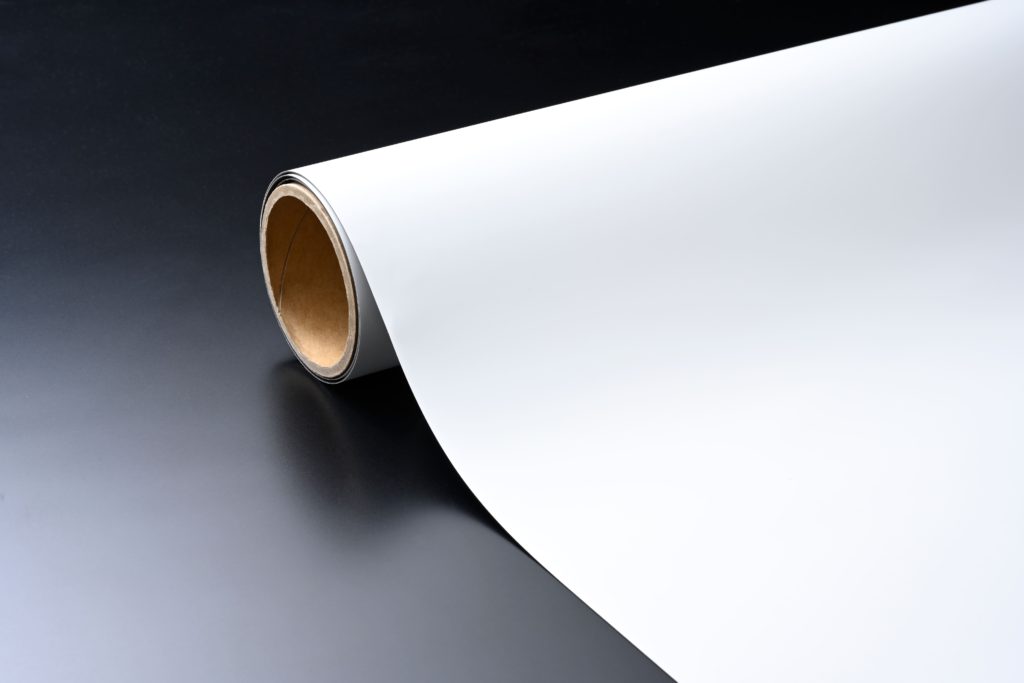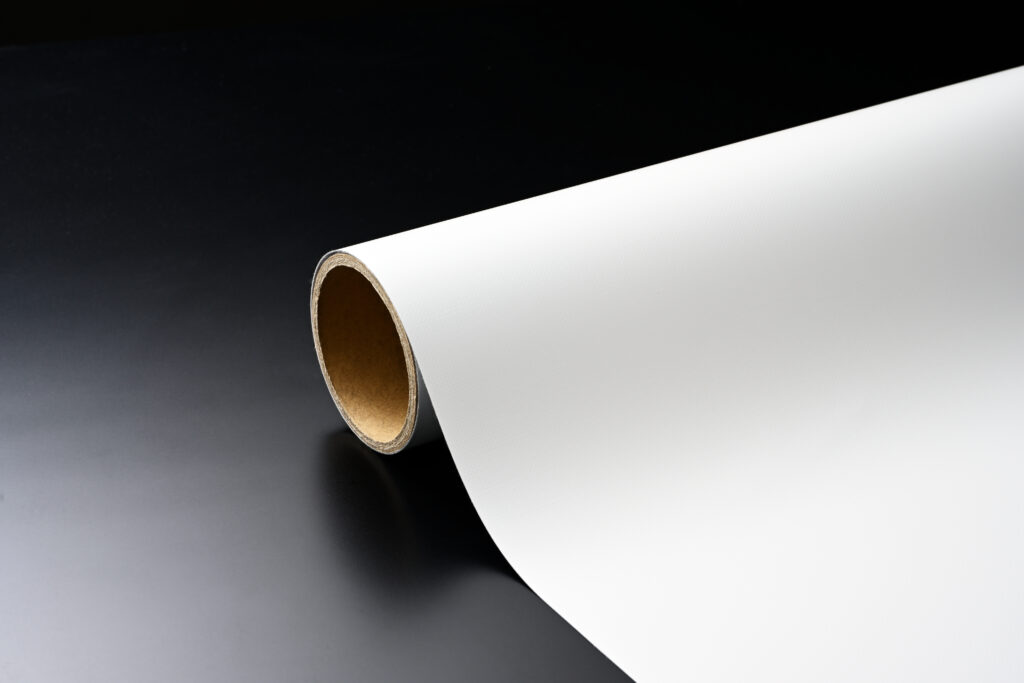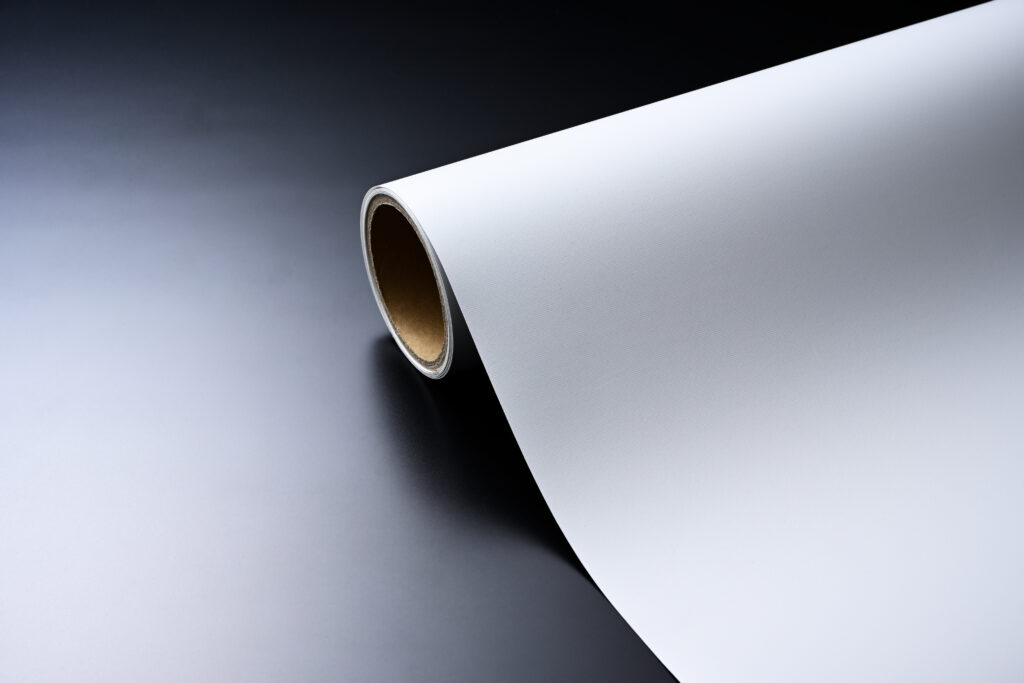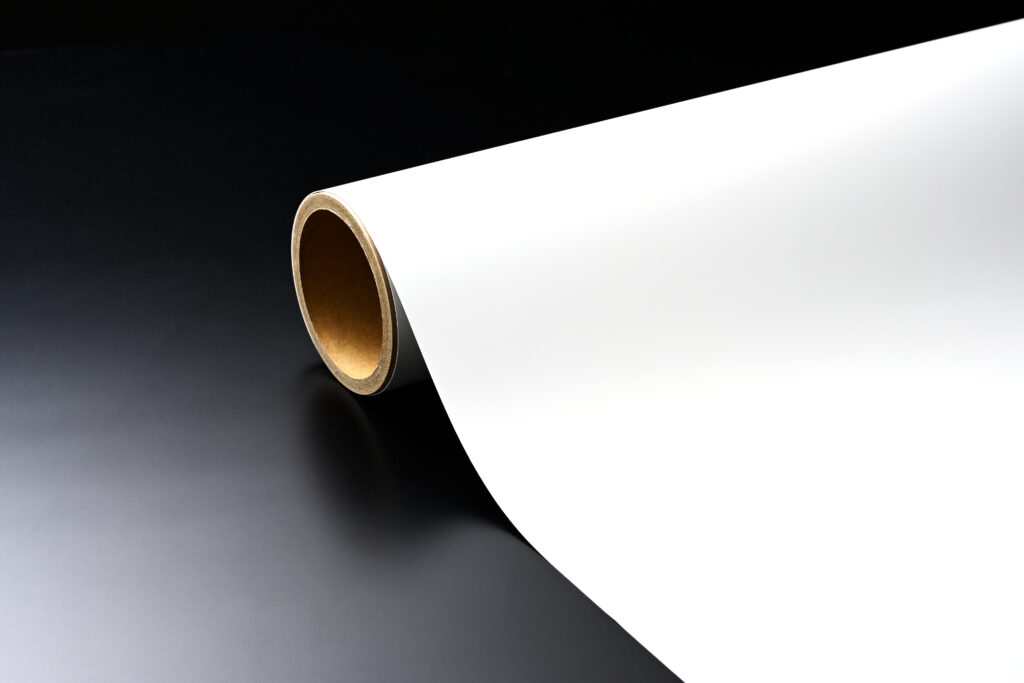
Recreating the natural phenomenon of radiative cooling through unique optical design.
Contributing to a carbon-neutral society with world-class radiative cooling performance.


Recreating the natural phenomenon of radiative cooling through unique optical design.
Contributing to a carbon-neutral society with world-class radiative cooling performance.
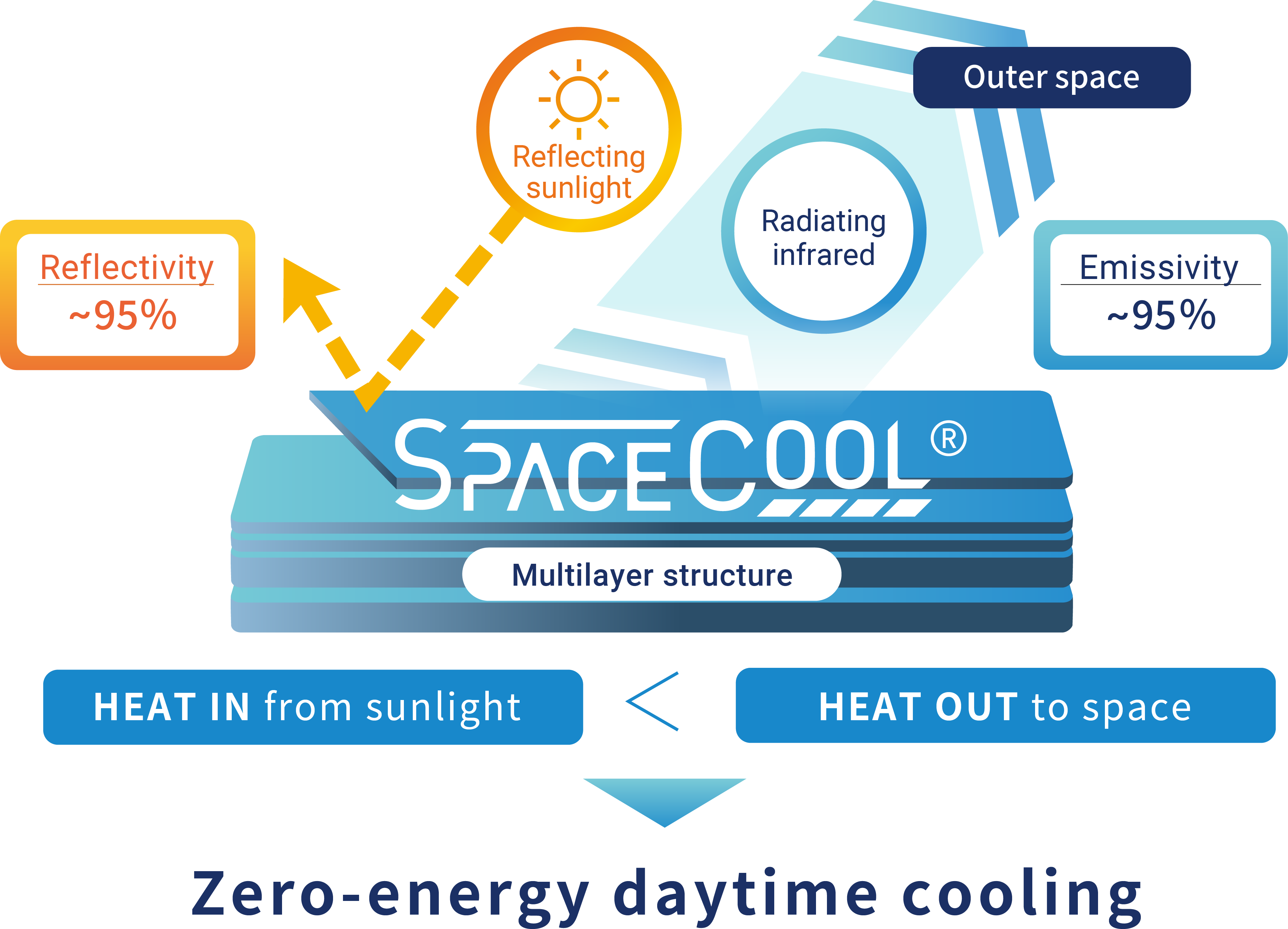
The heat energy accumulated on the Earth’s surface due to solar absorption is converted into light energy within the wavelengths of the “atmospheric window” and transferred to the cold outer space at -270°C.
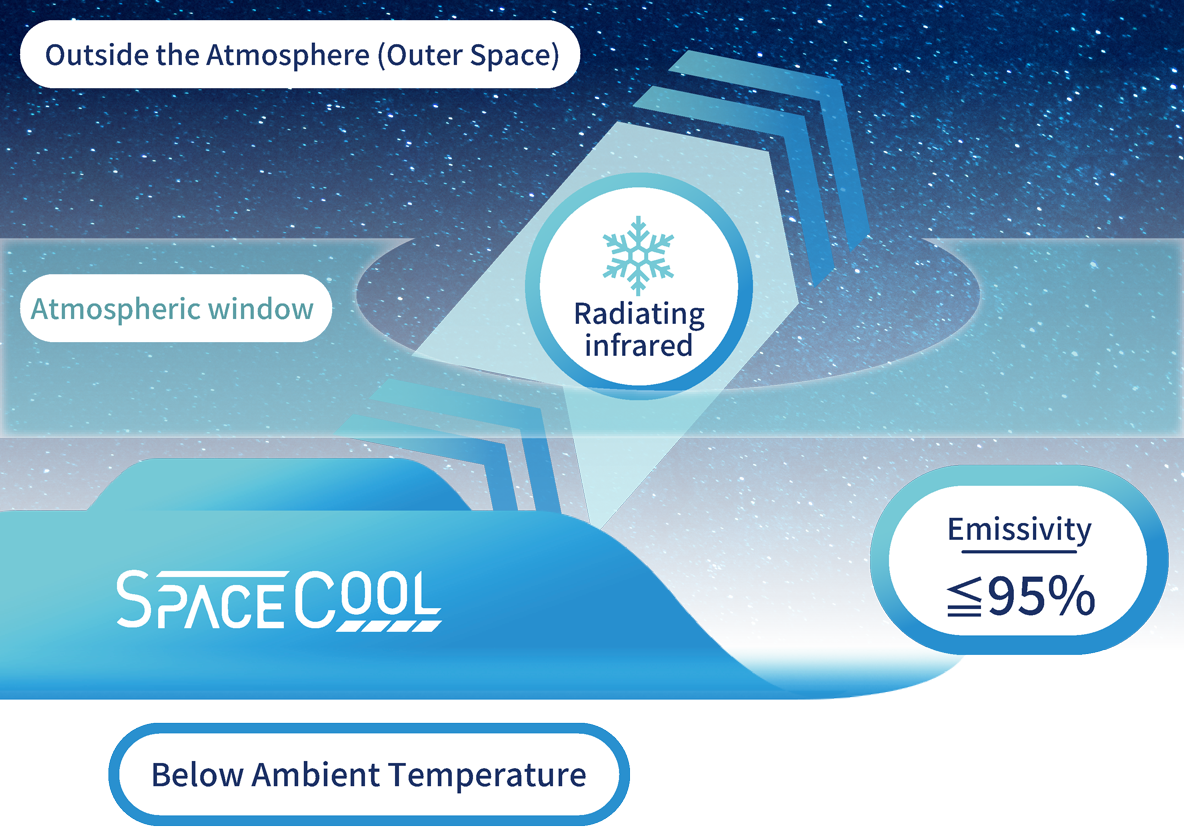
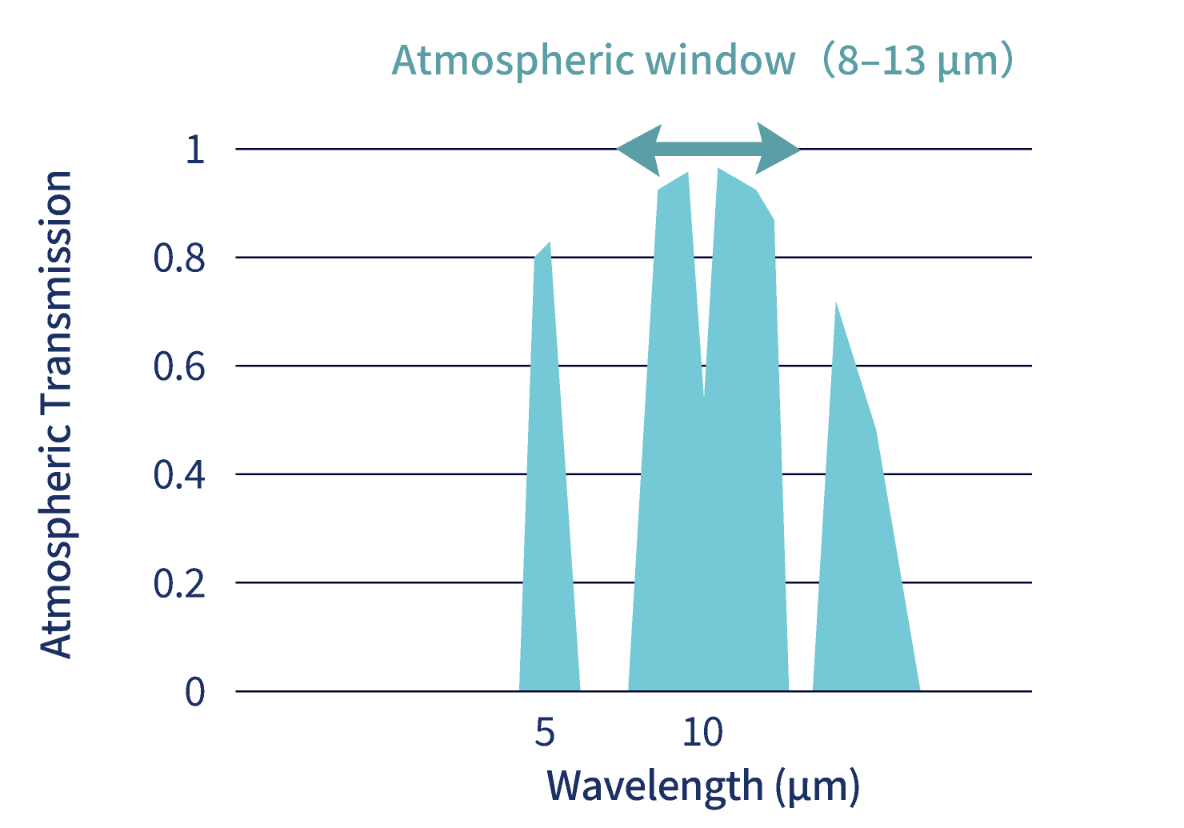
Matter absorbs light energy and converts it into heat energy, which raises its temperature. Thus, light energy from the sun warms the earth's surface and makes it hot during the day.
SPACECOOL increases the radiative cooling effect by converting ambient thermal energy into light energy in the wavelength range of the "atmospheric window."

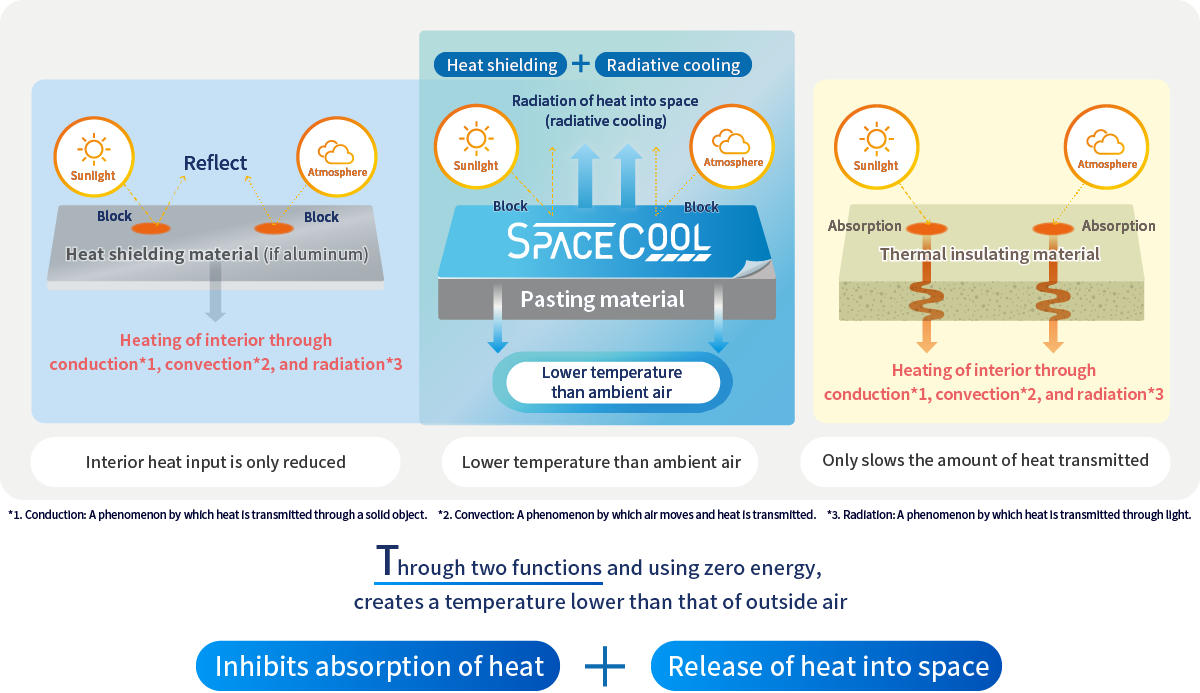
Conventional thermal insulation and heat-shielding materials only reduce the amount of solar heat entering a room; they do not provide any cooling effect. In contrast, SPACECOOL not only suppresses solar heat gain but also actively radiates indoor heat into space, enabling daytime cooling with zero energy—something impossible with traditional technologies.

Our engineers have conducted rigorous research and extensive field testing to ensure that users can truly experience the safety, comfort, and economic benefits offered by SPACECOOL.
We continue to advance our research and testing every day to provide a reliable product that everyone can use with confidence.



Solar reflective paint SPACECOOL
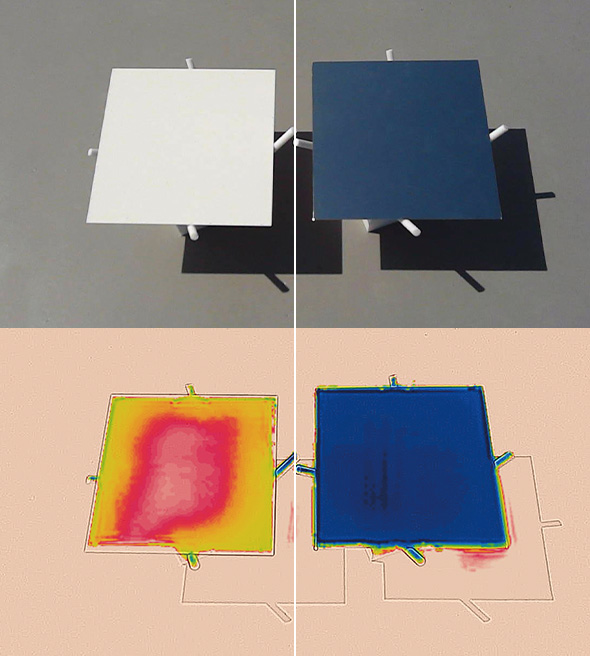
Steel Plate Backside Temperature Comparison
(Solar Reflective Paint vs SPACECOOL)

EffectA steel plate coated with solar reflective paint remains 10-20°C above outdoor temperature.
A steel plate with SPACECOOL maintains a temperature below outdoor temperature.


Tests were conducted comparing SPACECOOL tents with tents made from conventional materials.
The perceived temperature inside the conventional tent reached 45℃, while the SPACECOOL tent maintained approximately 35℃ —confirming a 10℃ reduction.

Apparent Temperature (Black body temperature)

| SPACECOOL Tent | Conventional Tent | |
|---|---|---|
| Thermography | 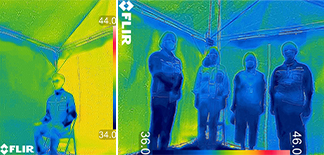 |
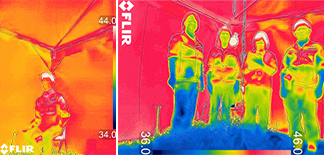 |
| SubjectA | 36.5℃※2 | 40.0℃※2 |
| SubjectB | 35.5℃※2 | 40.5℃※2 |
| SubjectC | 36.0℃※2 | 40.5℃※2 |
| SubjectD | 36.0℃※2 | 40.5℃※2 |
| SubjectE | 36.0℃※2 | 40.0℃※2 |
| Impressions |
|
|
*2 Skin temperature (measured at head)
Tests were conducted by applying SPACECOOL to a white storage shed and comparing its performance with a shed fully insulated with 50 mm of glass wool and an untreated baseline shed.
• Ceiling temperature: Approximately 20℃ lower compared with the other two sheds
• Indoor temperature: Approximately 10℃ lower compared with the untreated baseline shed.


Tests were conducted by applying SPACECOOL to prefabricated units used at construction sites and comparing their electricity consumption with untreated units.
Electricity consumption between 9:00 AM and 5:00 PM was reduced by approximately 20% when SPACECOOL was applied.


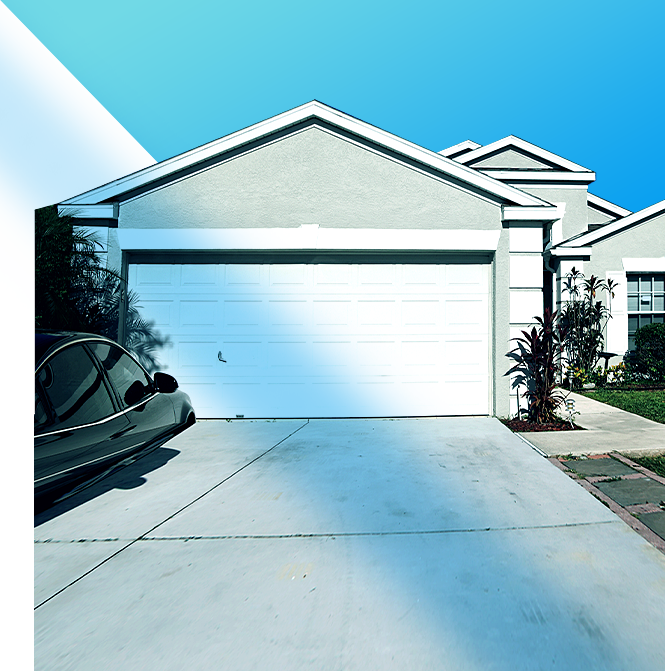
Our new material creates comfortable cooling while avoiding over reliance on using energy like electricity.
Protect important things from heat and allow everyone spend their days comfortable and safe.