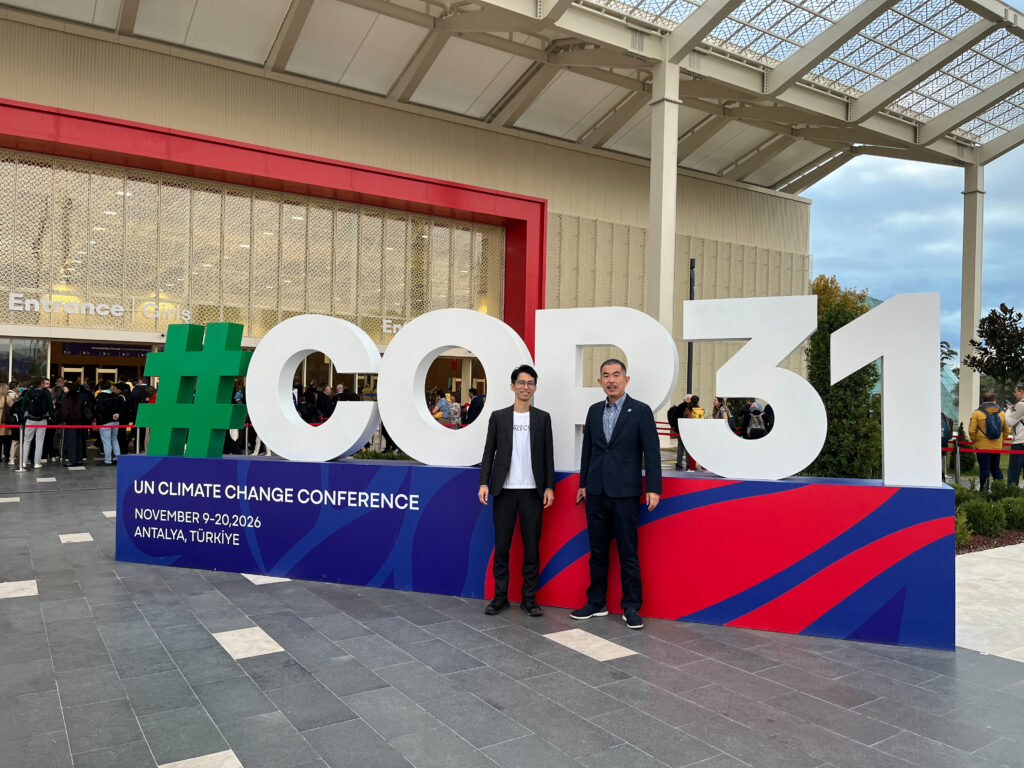
SPACECOOL Speaks at “Passive First for Cooler Cities” at COP31 on November 12

On November 12, 2026, SPACECOOL delivered a 10-minute speech at a session titled “Passive First for Cooler Cities” at COP31 (the 31st Conference of the Parties to the United Nations Framework Convention on Climate Change), held in Antalya, Türkiye.
The session was jointly organized by the United Nations Environment Programme (UNEP)’s Cool Coalition and the Alliance for an Energy Efficient Economy (AEEE). It focused on how passive cooling can be scaled up to address rising temperatures in cities and buildings.
The Importance of Passive Cooling in Addressing Global Heat Challenges
As extreme heat intensifies around the world, demand for cooling continues to grow. However, relying solely on air-conditioning (A/C) to address this challenge could further increase electricity demand and greenhouse gas emissions.
This makes the concept of “Passive First” increasingly important: prioritizing passive cooling solutions before relying on energy-intensive A/C. By preventing buildings and equipment from heating up in the first place, we can reduce cooling demand and use mechanical cooling more efficiently when needed.
SPACECOOL’s radiative cooling technology reflects sunlight while releasing heat into space as infrared radiation, providing a cooling effect without consuming electricity. Its applications are expanding across a range of areas, including building rooftops, outdoor equipment, and tents.
During the session, we presented the potential of radiative cooling technology and how it can contribute to addressing heat challenges in cities and communities around the world.
Engagement and Feedback from COP31 Participants
We were impressed by the strong interest and enthusiasm shown by the participants. The Q&A session generated numerous questions, and we also received various inquiries from attendees after the session. These included questions about how passive cooling can be put into practice and the potential applications of radiative cooling materials.
Through this opportunity, we connected with people from around the world who are working to tackle climate change and directly experienced the growing interest in and expectations for SPACECOOL. This was an important step toward expanding the adoption of passive cooling solutions globally.
SPACECOOL will continue working with global partners to make “Passive First” a common approach around the world, bringing our radiative cooling technology to a wider range of applications and contributing to solutions for heat-related challenges worldwide.